
Styling Tips
5 Bedroom Styling Tips to Create a Calm, Beautiful, and Functional Space
18 April 2026 · By Arwa
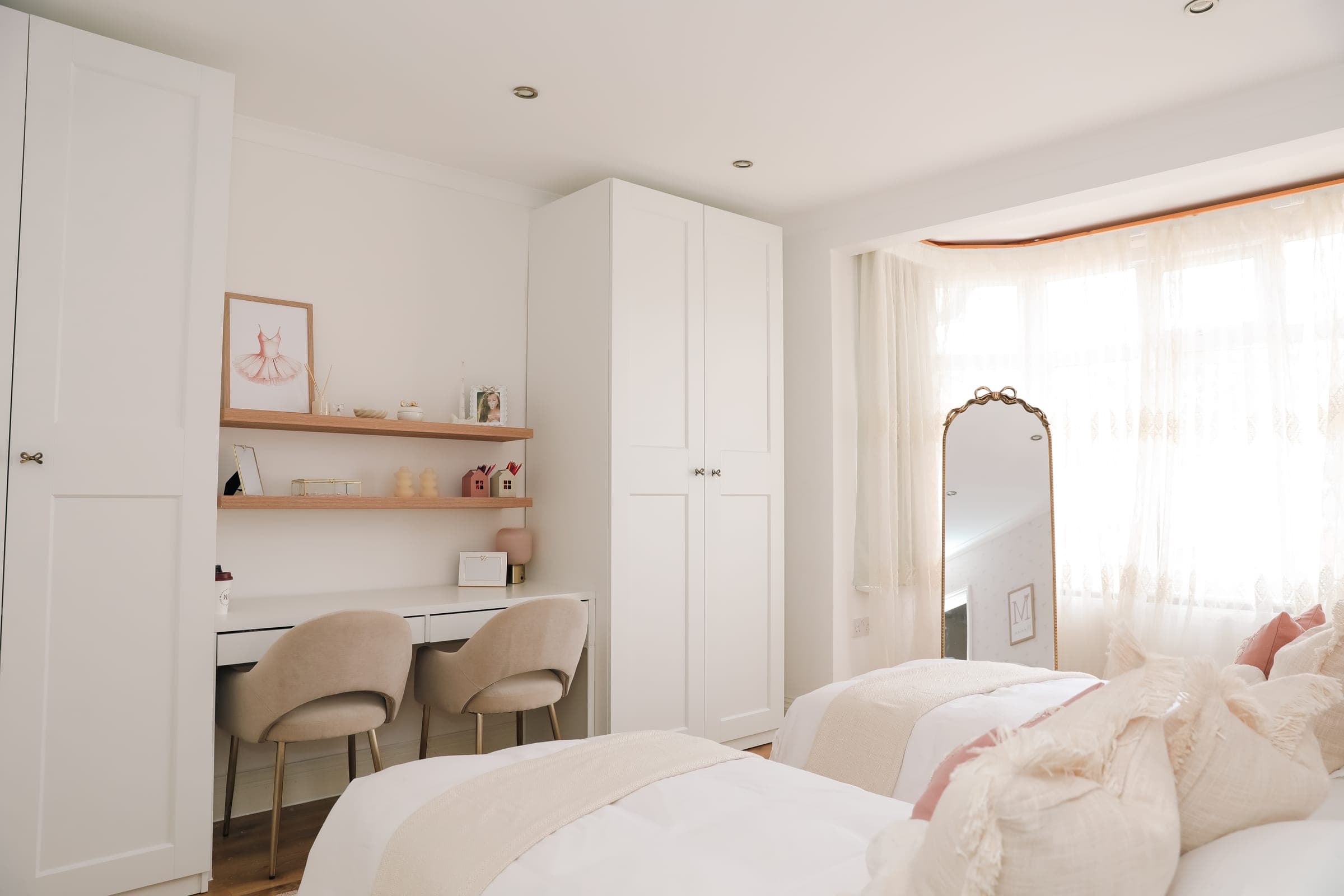
It is where your day begins, where it ends, and where you have the opportunity to rest, recharge, and step away from everything happening outside the room.
Yet bedrooms are often treated as an afterthought when designing a home.
We tend to focus our attention and budget on the rooms other people see first, such as kitchens, living rooms, and entertaining spaces. Meanwhile, the bedroom becomes a collection of furniture, bedding, and accessories that may individually look beautiful but do not necessarily work together.
Creating a beautiful bedroom does not always require replacing your furniture or completely redecorating.
Often, the biggest transformation comes from understanding how to arrange, layer, simplify, and style what you already have.
The goal is not simply to create a bedroom that photographs beautifully.
It is to create a space that feels beautiful to live in.
Here are five bedroom styling principles I use to create spaces that feel calm, considered, functional, and personal.
1. Layer Textures, Not Just Pillows
When people think about styling a bedroom, one of the first things they often do is add more cushions to the bed.
But adding more does not necessarily create a more luxurious result.
What gives a bedroom depth is the thoughtful combination of different textures.
Imagine crisp cotton sheets paired with soft linen, a textured throw, upholstered elements, warm timber, and perhaps a wool or boucle accent.
Even within a very neutral colour palette, these different surfaces create visual interest.
Why Texture Matters
Bedrooms naturally benefit from softness.
Hard surfaces alone can make a room feel cold or unfinished, while too many soft elements can make it feel visually heavy.
Layering allows you to find the balance between the two.
Instead of relying on strong colours or excessive decoration, texture gives the room character in a quieter way.
How to Layer Your Bed
Start with good quality bedding as your foundation.
Then introduce additional layers gradually.
Consider:
- Cotton or linen bedding
- A quilt or coverlet
- A textured throw
- A small selection of cushions in complementary fabrics
- An upholstered or textured headboard
You can combine linen, cotton, wool, velvet, boucle, or other tactile materials depending on the overall aesthetic of the room.
The key is restraint.
Designer Tip
Do not style your bed with so many cushions that removing them becomes part of your nightly routine.
A beautifully styled bedroom should still be practical.
Choose enough layers to create softness and depth without making the bed feel overcrowded.
2. Reconsider Your Furniture Layout
Before buying anything new, look at what you already have and ask whether it is positioned in the best possible way.
Sometimes the furniture is not the problem.
The layout is.
A bedroom can contain beautiful individual pieces and still feel uncomfortable if circulation has not been considered.
Start With the Bed
The bed is usually the largest piece of furniture in the room, so its position will influence almost everything else.
Ask yourself:
- Does the bed feel naturally positioned within the room?
- Is there enough space to move around it comfortably?
- Can you access wardrobes and drawers easily?
- Does furniture block natural light?
- Does the room feel balanced when you enter?
- Are there unnecessary pieces making the room feel smaller?
The strongest layout is not necessarily the one that fits the most furniture.
It is the one that allows the room to breathe.
Think About How You Actually Use the Room
A bedroom layout should respond to your daily routine.
If you need to move around the bed every morning to access your wardrobe, there should be comfortable circulation space.
If you regularly use a dressing table, it should have appropriate lighting and enough room to sit comfortably.
If you have a chair that is never used for anything except holding clothes, consider whether it genuinely needs to be there.
Every piece should earn its place.
Designer Tip
Before purchasing new bedroom furniture, experiment with the layout you already have.
Removing or repositioning one piece can sometimes transform the entire room.
3. Create One Clear Focal Point
Every well designed room needs somewhere for the eye to settle.
Without a clear focal point, several elements can compete for attention and make the room feel visually unsettled.
In most bedrooms, the bed naturally becomes the focal point.
Rather than fighting that, use it to create a clear visual anchor.
How to Make the Bed the Focal Point
You could introduce:
- A beautifully upholstered headboard
- Artwork positioned above the bed
- A subtle feature wall
- Carefully layered bedding
- Wall lighting on either side
- Interesting bedside tables or lamps
You do not need all of these elements at once.
In fact, choosing one or two strong ideas often creates a more sophisticated result than trying to make everything stand out.
Let Other Elements Support It
Once you have established your focal point, allow the surrounding pieces to play a quieter role.
If your headboard has a strong texture or shape, perhaps the bedding should remain relatively simple.
If you are using statement artwork, you may not need a highly decorative wall treatment behind it.
Design becomes more powerful when there is hierarchy.
Your eye should understand what to notice first, second, and third.
Designer Tip
A focal point does not need to be dramatic.
Sometimes a beautifully proportioned bed with simple bedding and carefully positioned lighting can create more impact than an elaborate feature wall.
Intentional does not have to mean loud.
4. Mix and Match With Intention
One of the easiest ways to make a bedroom feel overly staged is to buy everything as a matching set.
The same timber finish.
Matching bedside tables.
Matching drawers.
Matching lamps.
Matching accessories.
Everything coordinates, but nothing has personality.
Some of the most beautiful bedrooms feel as though they have developed naturally over time.
Create Relationships Instead of Exact Matches
Your furniture and accessories do not need to be identical.
They simply need to relate to one another.
You might combine different wood tones, provided they share similar warmth.
A contemporary bedside table can work beautifully with a more traditional piece elsewhere in the room.
Smooth surfaces can be balanced with textured fabrics.
A darker accent can provide contrast against a softer neutral palette.
The goal is not perfect matching.
It is visual harmony.
Use Repetition to Create Cohesion
If you are mixing different pieces, repetition helps connect them.
A warm timber tone might appear in your bedside table and again in a picture frame.
A muted accent colour from your artwork might reappear subtly in a cushion.
A metal finish used on your lighting could be repeated through smaller details.
These small relationships make a room feel connected without making it look overly coordinated.
Designer Tip
Before adding something new, ask yourself what it contributes.
Does it introduce texture?
Does it create contrast?
Does it repeat an existing tone?
Does it add function?
If it does none of these things, the room may not need it.
5. Create a Quiet Corner
Your bedroom does not have to function solely as a place to sleep.
If space allows, creating a small area dedicated to slowing down can completely change how the room feels.
This does not need to become a large reading area or require additional furniture.
A quiet corner can be very simple.
What Could a Quiet Corner Include?
Depending on the size of your room, consider:
- A comfortable chair
- A small stool or bench
- A compact side table
- A reading lamp
- A favourite book
- A small piece of artwork
- One carefully chosen decorative object
The important part is not how much you add.
It is the purpose you give the area.
Perhaps it becomes somewhere to read for ten minutes before bed.
Maybe it is where you sit in the morning before beginning your day.
That small moment of intention can make the bedroom feel far more personal.
Keep It Simple
A quiet corner should feel peaceful, not like another surface that needs to be styled.
Avoid filling the table with accessories or adding furniture simply because there is an empty corner.
Empty space has value too.
Designer Tip
If your bedroom is small, you do not need to force a separate seating area into it.
A beautifully styled bedside area or a small bench can create the same sense of intention without compromising circulation.
Do Not Forget About Lighting
Although lighting is not one of the five styling tips, it influences every element of the bedroom.
A room can be beautifully styled and still feel uncomfortable if the lighting is too bright, cold, or one dimensional.
Avoid relying entirely on a central ceiling light.
Instead, think about different layers of lighting.
Bedside lamps or wall lights can provide softer illumination in the evening.
A floor lamp can create warmth in a larger room.
Task lighting can support dressing or reading areas.
The goal is to give yourself options.
Your bedroom should be able to transition from functional morning lighting to a softer, calmer atmosphere at night.
Consider What You See When You Wake Up
This is a small design exercise that can completely change how you think about your bedroom.
Lie in your bed and look around.
What do you see first?
Is it clutter?
A pile of clothes?
An unfinished wall?
A television surrounded by cables?
Or do you see something calm and considered?
We often design bedrooms according to how they look when we enter them, but it is equally important to consider how they feel from the bed itself.
The bedroom is one of the few spaces where you regularly experience the room from several different perspectives.
Design each of those views intentionally.
Give Everything a Place
A calm bedroom is difficult to achieve when everyday items have nowhere to go.
Before adding more decoration, address storage.
Think about the items that regularly end up on bedside tables, chairs, floors, or dressing tables.
Where should they actually live?
You may need better drawer organisation, concealed storage, baskets, additional wardrobe organisation, or simply fewer unnecessary items in the room.
Good storage is not just a practical decision.
It directly affects how peaceful the bedroom feels.
When visual clutter is reduced, the elements you intentionally chose have more room to stand out.
Common Bedroom Styling Mistakes to Avoid
Even beautifully furnished bedrooms can feel unresolved when a few basic design principles are overlooked.
Overcrowding the Room
Not every empty wall needs furniture.
Giving pieces space around them can make the entire room feel larger and more sophisticated.
Ignoring Circulation
You should be able to move comfortably around the bed and access wardrobes, drawers, windows, and doors without obstruction.
Relying on One Overhead Light
One central light rarely creates the warmth and flexibility a bedroom needs.
Layer your lighting instead.
Making Everything Match
A room can be coordinated without being identical.
Allow different materials, finishes, and pieces to create character.
Adding Decoration Without Purpose
More accessories do not automatically create a more finished room.
Choose fewer pieces with greater intention.
Following Trends Too Closely
Your bedroom is an intimate space.
It should reflect what makes you feel comfortable rather than simply reproducing what is currently popular.
Creating Calm Is About Editing Too
Bedroom styling is not only about deciding what to add.
Sometimes the most effective design decision is deciding what to remove.
Remove the furniture that interrupts the flow.
Reduce the number of accessories competing for attention.
Clear unnecessary items from bedside tables.
Simplify your bedding.
Create more breathing room between objects.
Editing allows the strongest elements of the room to become more visible.
It can also help you recognise what your bedroom genuinely needs before spending money on something new.
Final Thoughts
A calm, beautiful bedroom is not created by chance.
It is created through a series of thoughtful decisions about layout, texture, lighting, storage, proportion, and personality.
You do not necessarily need a completely new bedroom.
You may simply need to see your existing space differently.
Move the furniture.
Remove what is unnecessary.
Layer texture rather than clutter.
Create a clear focal point.
Improve the lighting.
Give everyday items somewhere to live.
And above all, design the room around the way you actually want to feel when you are in it.
Because the best bedrooms are not simply beautiful to look at.
They make you want to stay.
You do not always need to spend more.
You need to design with intention.
Why Loving Everything on Pinterest Is Actually Holding Your Home Back
Enjoyed This
Let's Talk About Your Home
Book a consultation with Babylon Design Studio and start your project with clarity, from layout to final styling.
Book a Consultation